 |
Blood clots are the body's built-in mechanism for stopping bleeding. Under certain conditions, they can be life-saving.
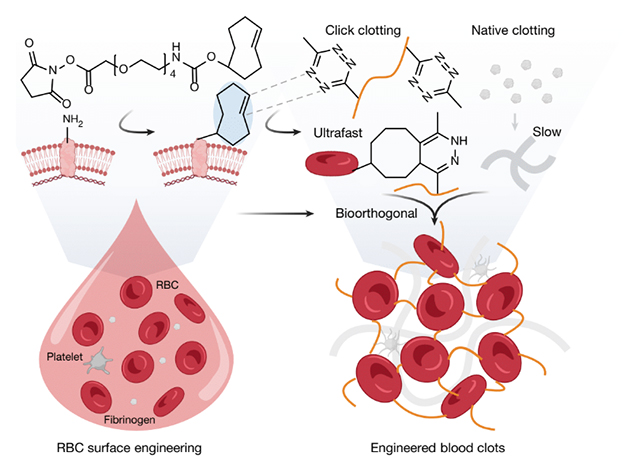
Scientists have developed new, specially engineered blood clots that form faster and last longer than natural ones.
Called engineered blood clots, or EBCs, they are created
using a "click-and-clot" method from the patient's or donor's blood.
The idea is that these super clots, which form in seconds, could one day be used as emergency patches during surgeries and accidents.
The team that developed this blood clotting technology, from institutions in Canada and the United States, is confident that their EBCs can help stop severe bleeding and speed tissue healing. This could be especially beneficial for people with bleeding disorders.
"Natural blood clots can form slowly and be mechanically fragile, limiting their ability to stop severe bleeding and potentially impairing healing," says mechanical engineer Jianyu Li of McGill University in Canada.
"Our work demonstrates that, with appropriate modification, red blood cells can play a central structural role, enabling the creation of stronger and more functional biomaterials."
The use of red blood cells is significant: these cells form nearly half the volume of naturally occurring blood clots, but lack particular mechanical strength, making them prone to failure.



0 Comments