
Panic attacks can be a frightening, overwhelming, and helpless experience, but there is potential for the development of effective new treatments using antibiotics.
It is already known that carbon dioxide (CO2) can trigger panic attacks as the brain detects signs of suffocation, and brain immune cells called microglia may be involved in triggering this emergency response.
This is precisely where minocycline is drawing attention. Minocycline is a common antibiotic effective in reducing inflammation and calming microglia.
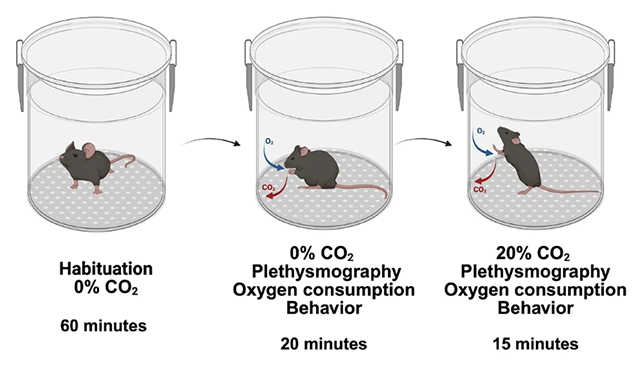
In a new study, Brazilian researchers synthesized the results of several studies to determine if minocycline is suitable for treating panic attacks. The research team conducted an experiment administering minocycline to mice and 40 patients with panic disorder (40 women and 9 men).
"In an experimental model in which panic attacks are induced by carbon dioxide inhalation, mice that received minocycline for 14 days prior to the experiment showed a reduction in one of the panic-inducing responses," stated Beatriz de Oliveira, a biologist at the State University of São Paulo (UNESP).
"In human trials as well, minocycline reduced the intensity of panic attacks induced by carbon dioxide inhalation."
In both the experimental animals and human patients, minocycline was administered along with clonazepam (commonly sold under the brand names Clonofin or Rivotril), the most commonly prescribed anti-panic drug.
Mice administered minocycline or clonazepam for 14 days consistently showed a less startled response when exposed to carbon dioxide. Additionally, the mice administered minocycline showed slightly more stable breathing patterns and changes in metabolism.
Further analysis on mice supported the plan to target microglia. When carbon dioxide was rapidly supplied, these immune cells were indeed activated in the blue nucleus of the brainstem (the area responsible for CO2 detection and respiratory regulation). However, when minocycline was administered, this activation was suppressed.
Both treatments were also effective in humans and reduced the severity of panic attacks based on standard clinical evaluations. Protein changes associated with reduced inflammation were also observed in the minocycline group.
"It is well known that some mental illnesses are caused by inflammation of nerve cells," says Luciane Gargalioni, a biologist at UNESP.
"Since minocycline exhibits anti-inflammatory effects at low doses but lacks antibiotic efficacy, symptom improvement appears to occur through the reduction of inflammation. This is a different mechanism from clonazepam, which inhibits specific receptors in the brain."
Because minocycline is already approved as an antibiotic, the approval process for it as a treatment for panic disorder is expected to be faster. Furthermore, the dosage used in this study was lower than that used in general antibiotic treatment, reducing the risk of bacterial resistance.
Minocycline is expected to eventually be developed as an alternative to psychiatric drugs such as clonazepam. Clonazepam is associated with undesirable side effects, such as a decrease in heart rate and respiratory rate.
However, more research is needed to reach this stage. Larger-scale clinical trials and a close analysis of the effects of minocycline on microglia are required.
The fact that changes in anti-inflammatory proteins observed in humans were not observed in mice necessitates further research. This suggests the possibility that mechanisms other than the inhibition of microglia activity are at play.
Related Content: What is the difference between anxiety disorders and obsessive-compulsive disorder? Psychologists explain.
In the United States, it is estimated that about 5% of the total population experiences panic disorder at least once in their lifetime; therefore, it appears that millions of people worldwide could benefit from this new treatment.
In their published paper, the research team stated, "The pathophysiological insights into panic attacks revealed through this study could pave the way for the development of more accurate and effective treatments for panic disorder."
This study was published in the journal Translational Psychiatry.



0 Comments