 |
A surprising study on mice suggests that the brain is not a "blank slate" waiting to be filled with memories at birth.
Rather, the brain appears to start in a "full" and somewhat disorganized state from birth, optimizing itself through learning.
Neuroscientists at the Austrian Institute of Science and Technology (ISTA) observed the brains of mice from birth through adulthood, focusing on the complexity of key memory circuits in the hippocampus.
The hippocampus is a brain region involved in converting spatial memory and short-term memory into long-term memory.
The research team discovered that the CA3 pyramidal neuron network in the brains of young mice exhibited very dense and random connections. However, as the mice aged, this network became more sophisticated and organized.
"This discovery was very surprising," said Peter Jonas, a neuroscientist at ISTA.
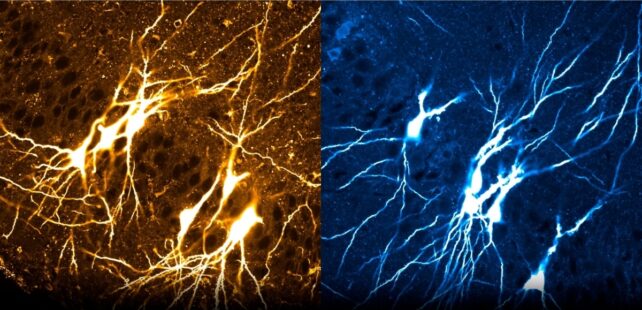
"Intuitively, you would expect neural networks to grow and become denser over time," explains Jonas.
"However, the exact opposite phenomenon occurs here. Much like a pruning model, it starts out dense and then gradually becomes simplified and optimized."
While the exact reason why the brain develops in this way is not fully understood, the researchers speculate that if a foundation is already in place, neurons can connect more efficiently.
Conversely, in a blank slate, neurons located far apart must first find each other to communicate. It will take a longer time for a developing brain to learn.
Consider this: If you need to travel from one point to another, it would be much faster because there is already a densely connected road network, so you simply need to select the road necessary to get from A to B.
On the other hand, if you had to build the road yourself from scratch to reach your destination, it would take much longer.
The research team measured the electrical activity of neurons and other cellular processes in mice at three developmental stages: around 7–8 days after birth, around 18–25 days after birth (adolescence), and around 45–50 days after birth (adulthood).
The results showed that neurons in the mouse hippocampal circuit initially appear dense and random, but evolve into a more structured network over time.
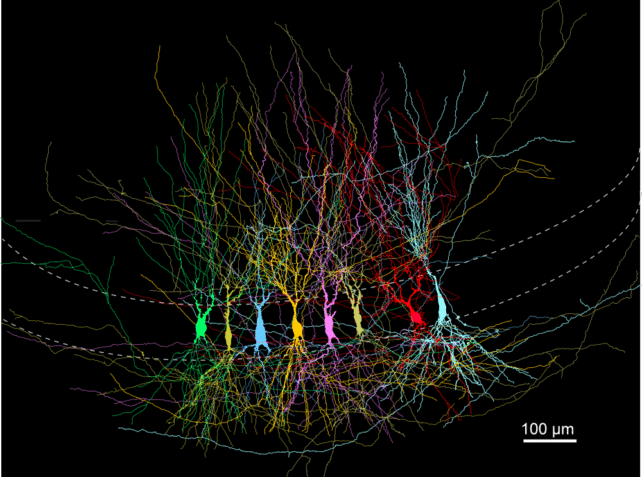
The research team suggests this may be because the hippocampus performs the difficult role of processing and connecting information coming from the eyes, ears, and nose.
"It is a very complex task for nerve cells," says Dr. Jonas.
"The process of selectively pruning after initially exhibiting active connectivity may be what enables this information integration."
Related article: Alzheimer's risk genes may cause early changes in brain activity, but they may be reversible
It has not yet been determined whether these research findings apply to the human brain.
However, the idea that the brain might be like a work of art sculpted in marble rather than clay is intriguing.
This study was published in the journal Nature Communications.



0 Comments