
Microplastic particles are entering the soil, carrying harmful additives and pollutants along with them. These substances have been detected in crops such as lettuce, wheat, and carrots, demonstrating how plastics and their additives travel up the food chain to the salads we eat and into our bodies.
A research team led by Professor Joseph Bochter, an environmental biotechnologist at Murdoch University in Australia, reviewed approximately 200 scientific papers to track how plastics and the chemicals used in their manufacture enter farmlands and produce.
Scientists estimate that hundreds of thousands of tons of microplastics enter farmlands in Europe and North America every year.
The research team stated, "Soil acts as a long-term reservoir that accumulates these non-biodegradable pollutants over time; in the UK alone, it is estimated that about 22,500 tons of microplastics enter the soil annually through fertilizers and additives."
Plastic mulching is a common agricultural technique that involves covering soil with plastic sheets to achieve effects such as weed suppression, moisture retention, and soil temperature equalization. Farmers around the world are adopting this technology as it demonstrates excellent effects in increasing crop yields and improving water usage efficiency.
However, as the popularity of plastic mulching has grown, it has also become a major source of microplastics and nanoplastics entering agricultural soil, as pointed out in several studies.
Researchers also discovered that sewage sludge, biosolids, and organic fertilizers are sources of microplastics found in grains and vegetables.
Microplastics can penetrate plants through various pathways. They enter the plant through endocytosis, a process in which plant cells, particularly root cells, absorb foreign substances. They also reach plants by directly absorbing airborne microplastics through leaf stomata or by passing them to water absorbed by the roots.
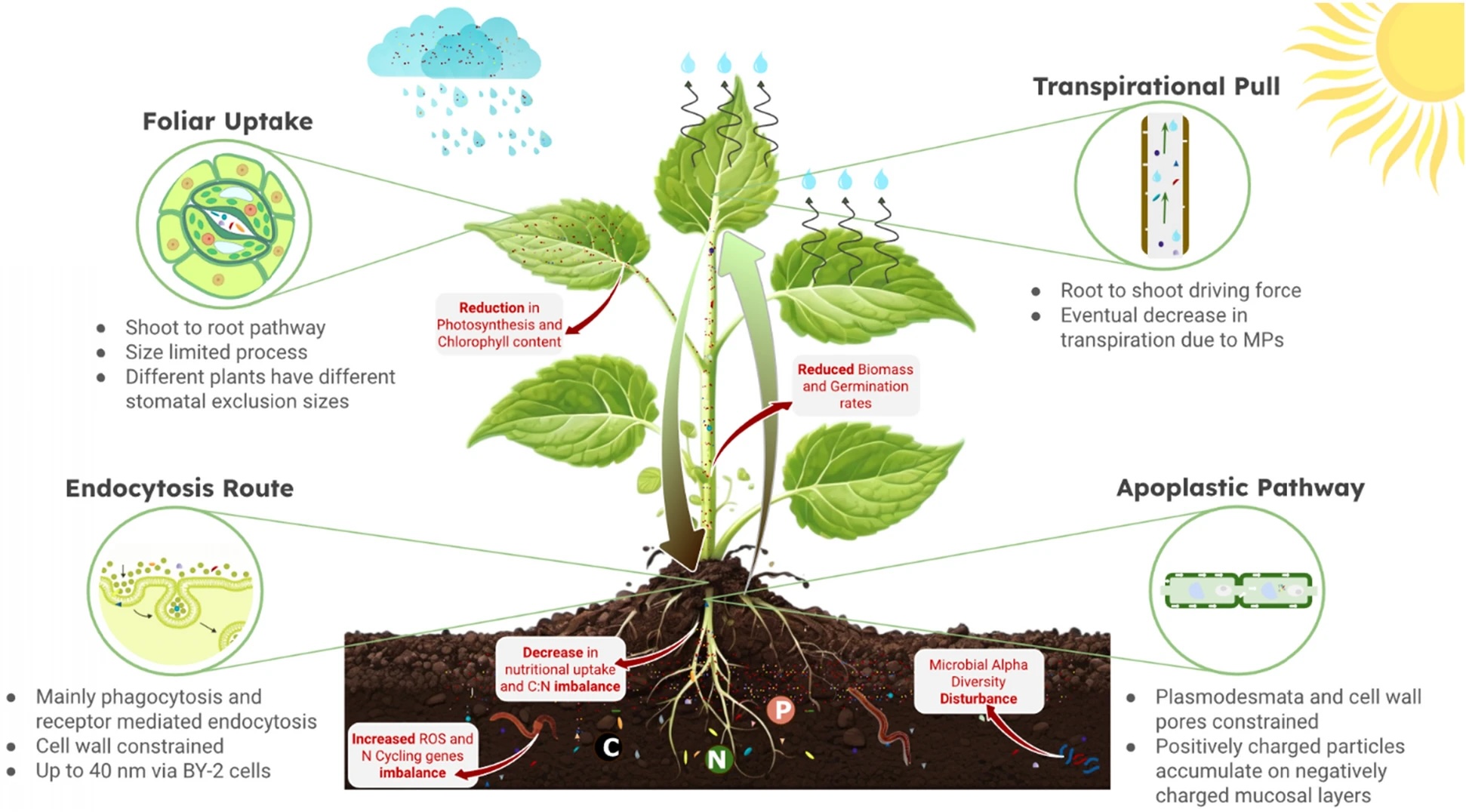
"These microplastics are turning food production sites into plastic reservoirs," says Bockter. He expressed serious concern regarding the lack of transparency and research on plastic additives commonly used alongside microplastics. Studies indicate that these microplastics can have adverse effects on human health as well as reduce global crop yields.
In the human body, micro and nano-sized plastic particles have been linked to male infertility, heart and blood vessel damage, hormone disruption, degeneration of brain neurons, and DNA damage. Of particular concern is research showing that materials used in plastic manufacturing can be transferred from mother to fetus through the placenta.



0 Comments