
Researchers at UNAB are studying the uncontrolled increase in black sea urchins in Chile, which is causing serious damage to the seabed. They are collaborating with local fishermen to monitor and assess the impact, attributed to overpopulation that devours algae essential to the ecosystems.
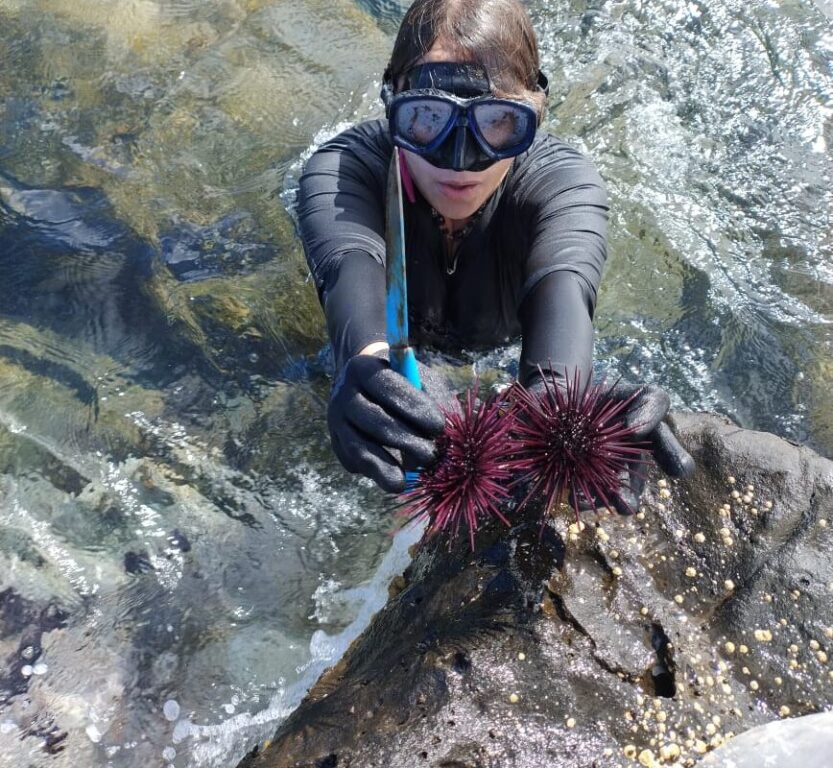
Researchers from the Quintay Marine Research Center (CIMARQ) of Andrés Bello University are investigating the uncontrolled increase of different species of black sea urchins in Chile .
According to scientists, this is a phenomenon that is devastating the seabed, especially in areas such as Quintay, Rapa Nui and the Juan Fernández Archipelago , causing veritable "underwater deserts".
This led CIMARQ researchers to collaborate with artisanal fishermen and local organizations to develop a monitoring program in the most affected areas and study the impact that sea urchins are causing.
Now, they believe the problem lies in the sustained increase of these species, as they consume algae, benthic organisms, and other forms of marine life that are essential for ecological balance.
Claudia Navarrete Taito, project manager and researcher at CIMARQ, explains in a statement that “the loss of biodiversity directly impacts artisanal fishing, tourism and food security of coastal communities .”
“The integration of local knowledge and applied science allowed for a much more accurate assessment of the state of these seabeds,” he adds.
What's happening to black hedgehogs?
To study this phenomenon, researchers used underwater audiovisual recordings, participatory monitoring with divers and fishermen, as well as image processing using machine learning systems.
The results allowed them to observe more clearly how the proliferation of black sea urchins is progressing and they discovered that they can completely modify the marine ecosystem very quickly .
In fact, in some sectors they noticed that areas that were once abundant in macroalgae are now practically empty expanses , where only black sea urchins now live.
This last point causes a chain reaction, affecting the entire food chain , because algae provide shelter and a food source for fish, mollusks, and other marine species. Furthermore, it reduces the resilience of ecosystems.
Scientists warn that these types of phenomena could intensify in the coming years due to environmental alterations from climate change , such as the increase in ocean temperature, for example.
In addition, these imbalances also decrease the presence of natural predators that kept hedgehog populations in check.
How to restore the ocean
“The challenge now is to mitigate the ecological effects, restore the balance of ecosystems and, at the same time, seek sustainable solutions for the communities that depend on the sea,” Navarrete points out.
The researcher and her team call for strengthening scientific monitoring and advancing evidence-based marine conservation and management policies, supported by currently available technologies such as AI and automated analysis, which can anticipate these phenomena.
In the case of Quintay, for example, as well as other locations in the Valparaíso Region, the increase in the black sea urchin is already directly impacting the red sea urchin, a species of commercial interest , especially for artisanal fishing.
Specifically, they propose: moving towards adaptive management strategies, macroalgae restoration, and permanent monitoring of marine ecosystems.



0 Comments