
A new study has revealed that cocaine was detected in sharks in the Bahamas.
Researchers from the Bahamas, Brazil, and Chile also found caffeine and painkiller components in the sharks. This is not due to a change in the sharks' lifestyles, but rather the result of unavoidable exposure to these substances as marine pollution intensifies.
It is concerning that these substances have been found in tropical regions widely known for their idyllic and pristine nature. It appears that there are few places left on Earth where wildlife can remain completely free from human influence.
In their paper, the researchers stated, "Pharmaceuticals and illicit drugs are increasingly being highlighted as emerging environmental contaminants (CECs) in marine environments, particularly in areas undergoing rapid urbanization and tourism development."
"The continued influx of these substances poses a risk not only to marine biodiversity but also to human health through seafood consumption and marine leisure activities."
The research team analyzed blood samples from 85 sharks captured around Elucera Island, one of the most remote islands in the Bahamas. As a result, drugs were detected in some form in the bodies of 28 of the sharks.
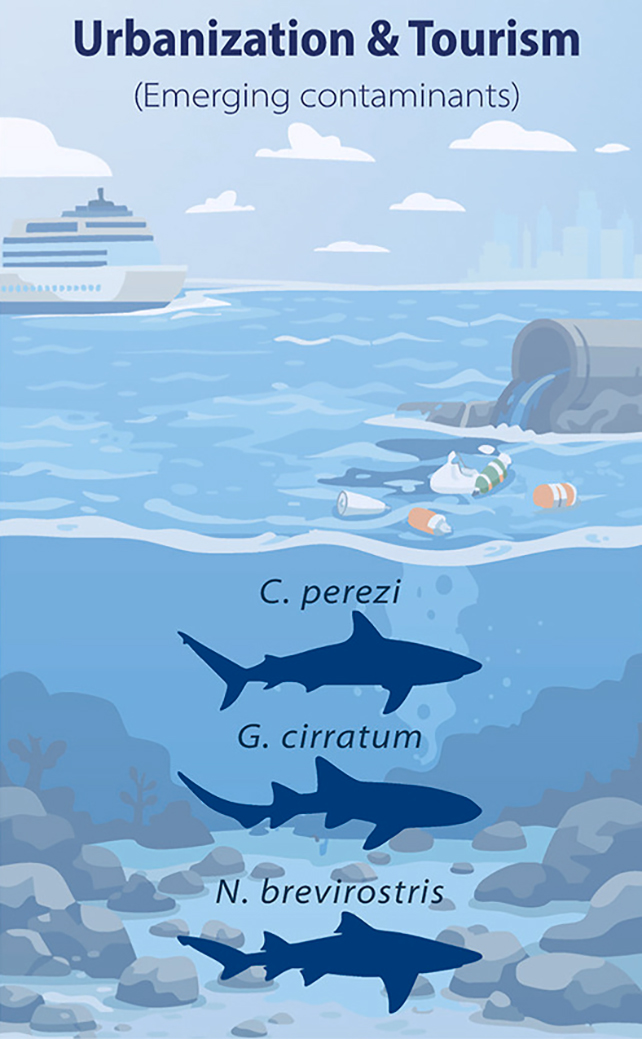
While caffeine was the most commonly detected substance, cocaine was also detected in two of the sharks tested. Researchers speculate that the sharks may have bitten into bags of cocaine that had fallen into the water.
"Sharks sometimes get exposed while biting into something to explore," said Natasha Wosnick, a biologist at the Federal University of Paraná, Brazil, in an interview with Joshua Labrun of Science News.
These sharks were captured near popular diving spots and tourist cruise ships, and it is being suggested that untreated ship wastewater, as well as wastewater generated from urban development and the tourism industry as a whole, may have influenced these results.
This is the first time caffeine has been detected in sharks, and also the first time cocaine has been detected in sharks in the Bahamas. The other two drugs detected in blood samples were the painkillers acetaminophen and diclofenac.
Experts are becoming increasingly concerned about this issue. According to a study published last year, cruise ships visiting the Arctic (essentially moving floating mini-cities) were found to be releasing antibiotics, pharmaceuticals, and other substances into the ocean.



0 Comments