Once established in a home, rats are rodents that pose not only property damage but also a health risk to residents and pets. Reproducing at an alarming rate, these pests must be eliminated as quickly as possible to prevent an infestation that is even more difficult to eradicate.
So, how do you get rid of rats? This article sheds light on the various methods available: from natural methods and old wives' tales to rodenticides and the most effective rat extermination treatment carried out by a professional pest control company like Solution Nuisible. Let us guide you; you'll have all the information you need to find the best solution for getting rid of rats for good.

Table of Contents
1 Grandma's Remedies for Getting Rid of Rats
2 Getting Rid of Rats with Natural Repellents
3 Chemical Treatment: Rodenticides (also known as "rat poison") Products 🏷️
4 Mechanical Traps with Immediate Effect Products 🏷️
5 Glue Traps (sticky) Products 🏷️
6 Ultrasonic Devices for Repelling Rats Products 🏷️
7 Killing a Rat Permanently: Methods
8 The Cat: The Rat's Greatest Predator
9 Prevention: Taking Action to Avoid Recurrence
10 Professional Solution (the Most Radical): Calling a Pest Control Company and a Licensed Exterminator
Questions & Answers (FAQ)
Safety
Solution-Nuisible expressly disclaims all liability for misuse and damage related to the products and techniques mentioned on its website (particularly those concerning human and animal health). Carefully follow the manufacturers' recommendations for the products you purchase.
If in doubt, entrust this task to a professional by contacting Solution-Nuisible:
09 70 79 79 79
(100% free call and telephone quote)
Everyone knows that getting rid of rats is not easy; they belong to one of the most intelligent species in the animal kingdom. Hunted for centuries by humans and a multitude of predators, they have learned to adapt and to be wary of anything that seems too good to be true. To survive, they have been clever enough to develop an astonishing system, with "tasting rats" within the colonies. We explain the various techniques that remain effective to this day.
1. Grandma's Recipes for Getting Rid of Rats
A grandma's recipe is a traditional solution, often passed down through generations, used to solve a problem; here are a few tips using household items.
– Eliminating a Rat with Everyday Products
To get rid of rats effectively and without using industrial chemicals, several alternative and eco-friendly methods are available. These grandma's tips are not only easy to prepare but also highly effective at getting rid of rats. Here are five proven solutions:
Baking Soda: To kill rats, mix baking soda with an attractive food, such as peanut butter. The baking soda causes excessive gas production in the rat's stomach, leading to its death. Place the mixture in areas where rats are frequently active, such as near garbage cans or food storage areas.
Bleach: Create a deadly mixture by combining bleach with milk and a food attractant like meat sauce. Pour this mixture into a shallow container and place it against walls or in dark places where rats often travel. Ingesting this mixture will cause serious damage to the rat's internal organs, killing it quickly.
Coca-Cola: Coca-Cola, due to its high sugar content, attracts rats. This drink disrupts the rat's digestive system and causes fatal organ failure shortly after ingestion. Place bowls of Coca-Cola where rat tracks are visible.
Plaster: For a discreet method, mix plaster with flour in a ratio of one tablespoon of plaster to two tablespoons of flour. Plaster is toxic to rats once ingested. Scatter this mixture in high-risk areas such as garages or basements.
Salt: Use salt, which is toxic to rats, by mixing it with foods these pests enjoy, such as cheese or grains. Salt disrupts the rat's fluid balance and leads to death by dehydration. Place the mixture in strategic locations where rats are frequently observed.
When using these methods to kill rats, be sure to position the bait in strategic locations and regularly monitor its effectiveness to keep your environment clean and rat-free.
While these old wives' tales can be effective in deterring a passing rat, their effectiveness may be limited in a larger colony. Other rats tend to wait and see if the first rat to try the bait remains healthy afterward; if it becomes ill, the rest of the colony may avoid the bait. The longer you wait, the more difficult and expensive it will be to eradicate the infestation. Therefore, in such cases, it is often preferable to use chemical treatments or quickly call upon the expertise of a local exterminator to get rid of the rats with a guaranteed, fast, and lasting effect.
2. Getting rid of rats using natural repellents
There are natural repellents that can keep rats away from homes without killing them. They are often used to prevent an infestation by disrupting and thus preventing the entry of one or more rats.
– Plants and Essential Oils
Among these natural products for repelling rats are:
Repellent plants (such as mint, sage, or bay): crush the leaves and place them in areas where rats pass.
Citronella or eucalyptus essential oils: their powerful scent will temporarily drive away pests.
Fruits, Vegetables, or Aromatic Herbs
Among the natural solutions for getting rid of rats, using certain fruits, vegetables, or aromatic herbs can be effective. Here are some options to consider:
Cloves: Place them in areas where rats hide or pass. Their strong scent will repel them.
Citrus fruits: Use orange or grapefruit peels to discourage rats, which dislike this smell.
Mint: Plant mint in your garden or place mint sachets near entrances to keep rats away.
Bay and sage: Their intense fragrance can Help deter rats from settling in your home.
Rosemary: Add rosemary sprigs to infested areas to keep them away.
Pepper: Sprinkle pepper in strategic locations to discourage rats with its strong odor.
Onion and garlic: Their strong smell can also help keep rats away.
These simple and natural solutions can be effective in controlling rats in an environmentally friendly way.
– Limitations of natural products
The problem with these natural methods is that they quickly lose their effectiveness due to the evaporation of the repellent odors they emit; this is why they must be checked continuously and replaced very regularly to ensure long-term effectiveness.
3. Chemical Treatment: Rodenticides, also known as "rat poison"
In the pest control arsenal, the use of rodenticides is one of the most common methods. This involves placing highly palatable toxic baits to attract rats and encourage them to eat them.
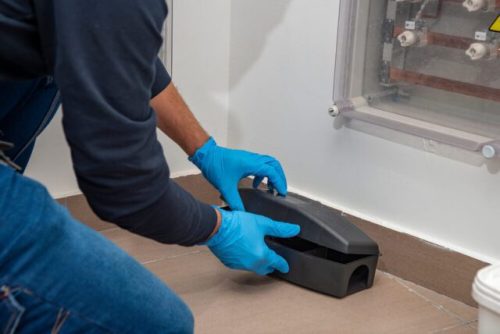
These baits are available in various forms and active ingredients and must be placed in sealed bait boxes designed to allow only the target species to enter. This prevents accidents involving ingestion by children, pets, or other wildlife.
For complete information, consult our dedicated article on the use of rodenticides. Alternatively, here are some consumer products we recommend using depending on the area to be treated.
– Rodenticides in various forms
For each situation, there is a suitable type of rodenticide; This depends primarily on the area to be treated (humidity, temperature, indoor/outdoor), but also on the level of infestation and the wariness of the species being targeted (a more palatable bait or a delayed-action poison will be necessary to avoid arousing the colony's suspicions).
Get effective rodenticides against rats, recommended by our professionals and tested for their efficacy, available on Amazon and have them delivered directly to your door:
– Secure access to bait in a bait station
You cannot scatter bait in the open air without securing it; accidents are unfortunately very common. When using rodenticides (even commercially available ones), you must restrict access to the poison to only the rats you wish to eradicate, to prevent ingestion by pets, children, and other non-target animals.
In addition, you should purchase rodent-specific bait stations; here are some recommended products, approved for their effectiveness after rigorous testing by our experts, which you can purchase on Amazon and receive with express delivery to your home:
No home remedy or commercial product will be as effective and thorough as a professional treatment.
Stop the infestation as quickly as possible (and thus limit the additional cost of a more extensive treatment), get a definitive answer, and receive a FREE, PERSONALIZED, and NO-OBLIGATION quote by phone right now:
Call 09 70 79 79 79 (toll-free) or write to us using the callback form to be contacted by a professional exterminator.
4. Mechanical traps with immediate effect
Several mechanical and/or electronic methods exist and are triggered when a rat is detected. Non-toxic, their effectiveness depends primarily on the attractiveness of the bait used. These rat traps are effective at capturing or instantly killing rodents while minimizing suffering for the animal:
The snap trap: an old and proven method, economical and easy to set, the latch releases a spring that snaps shut on the rat.
The electric shock trap: when the rat enters the trap, it receives an electric shock, instantly killing the animal by heart attack and thus avoiding any suffering.
The rat cage/trap: when the rat approaches the bait, the cage closes behind it, capturing it. However, these rat traps are somewhat limited, as they are rarely sufficient on their own to eradicate a large rat infestation. Indeed, they are mainly useful as a preventative measure when a first rat arrives on the premises, or to identify the rodent before chemical rat extermination treatment... implemented by one's own means (with the right rodenticides used according to the rules of the art) or by a rat extermination treatment carried out by a rat exterminator.
5. Glue Traps
An ecological and biological method, this involves placing glue traps in the areas most frequently used by rodents, where they will get stuck. Like mechanical and electronic methods, this type of trap is often used preventively. Rats are very wary, and during a large infestation, they will avoid the traps, rendering the device ineffective. Therefore, chemical treatment is clearly the preferred method for eliminating a well-established colony.
This treatment is rarely used because it is more painful for the animal. Opt for a more radical and painless treatment; this will be more ethical while remaining highly effective, especially with the professional treatments offered by our certified exterminators.
6. Ultrasound to Repel Rats
These electronic devices produce a sound imperceptible to the human ear but very bothersome to rats when they are nearby. Ultrasound waves do not penetrate walls, so their range is limited; this is why they are mainly used in utility rooms and electrical boxes to keep rats away from the cables they habitually gnaw on. Inexpensive, commercially available ultrasonic devices are not recommended; they are far too weak to have any effect, so don't waste your money and time. To obtain an effective ultrasonic rat repellent, expect to pay around one hundred euros per device (minimum), and you will generally need several depending on the size of the area to be protected.
7 Killing a Rat Permanently: The Methods
If traditional rat control methods haven't solved your infestation problem, you might consider more drastic methods to permanently eliminate these rodents. Here are some approaches to consider:
Rodent Poisons: These chemicals are designed to kill rats instantly. They are available as poisoned bait or pellets. Generally, rodenticides take effect within a few hours to a few days, depending on the product used.
Mechanical Traps: Snap traps, mousetraps, and bungee traps are mechanical devices designed to capture or kill rats. Depending on the type of trap and the force of the impact, rats can be killed instantly or within seconds of being triggered.
Electric Traps: These devices deliver a lethal electric shock to rats. They offer a quick and effective solution for eliminating rats, usually within seconds of activation.
While these methods can be effective in permanently eliminating rats, it's important to note that they don't guarantee the complete eradication of the infestation.
8. The Cat: The Rat's Greatest Predator
Besides being YouTube stars and the second most popular pet, we can't ignore the importance of cats in keeping rats away.
A natural and ecological method, as instinctive hunters, cats can be excellent allies in controlling and eliminating rat populations around your house or garden. They possess remarkable agility and speed, allowing them to capture rodents efficiently. In addition to being a non-toxic and environmentally friendly alternative, having a cat in rat-infested areas can also deter these pests from settling in, as they detect the presence of their natural predator. Thus, having a cat by your side is a formidable weapon that is both practical and beneficial in the fight against rats.
Of course, we don't recommend adopting a cat solely to get rid of rats; cats have needs that their owners must meet daily. Therefore, the decision to bring a cat into the family shouldn't be based solely on its ability to repel rats!
9 Prevention: Plan ahead to avoid recurrence
Once you've gotten rid of the rats using our methods, keep in mind that they inevitably found a use for your home at some point, and at least one entry point! Here are some preventative tips to avoid a recurrence.
Organizing food storage
Limit access to food sources: Store food in airtight containers and be sure to regularly clean storage areas and kitchen surfaces.
Waste management: Keep garbage cans covered and dispose of waste regularly to avoid attracting rodents.
Garden maintenance: Prune trees and bushes near the house and prevent the accumulation of debris, such as woodpiles, which could serve as shelter for rodents.
Seal and reinforce rat entry points.
Detecting the various entry points used by these intruders will require patience and meticulous attention to detail. To do this, carefully inspect the exterior, including the roof, garage, and attic.
Once you have identified the entry points in your house, begin sealing and sealing them against rats. Seal all cracks, holes, and openings with rodent-resistant materials, such as stainless steel or cement.
10. Professional solution (the most effective): Call a pest control company and a licensed exterminator.
To eradicate rats in the most effective and easy way, you can entrust the pest control treatment to a professional exterminator like Solution Nuisible. The technician is trained to find the most suitable solution through a precise diagnosis of the situation. Whether the area to be treated is the inside of your home, a garden, or business premises, they will make the right choices to rid you of rats permanently.
Contact us by phone at 06 22 35 16 29 (7 days a week, Monday to Saturday (8 am to 9 pm) & Sunday (10 am to 9 pm)) or by filling out our contact form for a free telephone quote from a local pest control expert in your area and throughout France.
A pest control technician installing a secure bait station for rats.
?Questions and Answers (FAQ)
What smell repels rats from the house?
To deter rats in your home, you can use scents like mint, peppermint essential oil, cayenne pepper, or ammonia, as these scents are known to repel rats.
Does killing the rats permanently solve the infestation problem?
No, killing rats does not permanently solve the infestation problem. Integrated management, including the elimination of food and shelter sources, is necessary for a long-term solution.
Are there environmentally friendly methods for killing rats?
Yes, there are environmentally friendly methods for controlling rat populations, such as the use of reusable traps or natural repellents , avoiding harmful chemicals.
What precautions should I take when using products to kill rats?
It is important to strictly follow the manufacturer's instructions and to use gloves and a mask to avoid direct exposure to the products, which may be toxic to humans and pets.
How and where can I dispose of a rat killed by poison or trap?
Dead rats should be handled with gloves and placed in a sealed plastic bag before being disposed of in an outdoor bin. It is important to check local regulations regarding the safe disposal of dead animals.
What to do when rats invade the chicken coop?
Rats pose a serious threat to your chicken coop. Several effective methods exist to get rid of rats in a chicken coop . Use rodent-specific traps, carefully seal any holes and cracks, and install fine mesh netting around the enclosure. Maintain strict hygiene by eliminating food sources. These techniques, combined with constant vigilance, will help protect your poultry from these dangerous pests.
Are the solutions you have proposed equally effective against martens?
Some methods for eliminating rats can also help get rid of martens permanently , but not all. Due to the specific nature of martens and the fact that killing them is prohibited, some solutions are unsuitable, such as the use of poisons, electric traps, or glue traps. It is best to opt for non-lethal solutions, such as sealing entry points, installing natural repellents, and securing your home to prevent them from entering.
How to get rid of rats in a restaurant?
The best way to get rid of rats in a restaurant is to call a professional pest control company specializing in restaurant rodent extermination . These professionals guarantee a fast, effective intervention that complies with health and safety standards. Trying to solve the problem yourself is risky and often ineffective.



0 Comments